
The Valley of the Temples, or Valle dei Templi in Italian, stands as a breathtaking testament to the grandeur of ancient Greek civilization in Sicily. Located near Agrigento, this UNESCO World Heritage site isn’t actually a valley, but rather a ridge. It showcases remarkably well-preserved Doric temples dating back to the 5th and 6th centuries BC. A period when Akragas (the ancient name of Agrigento) was one of the most important Greek colonies in the Mediterranean. The temples are primarily arranged along an east-west axis on the ridge, offering stunning views. Over centuries, the site witnessed periods of abandonment, Roman influence, and even Christian conversion, contributing to its layered history. Walking among these colossal ruins offers a profound connection to the past. It allows visitors to imagine the vibrant life that once thrived here.
A Symbol of Harmony in the Valley of the Temples
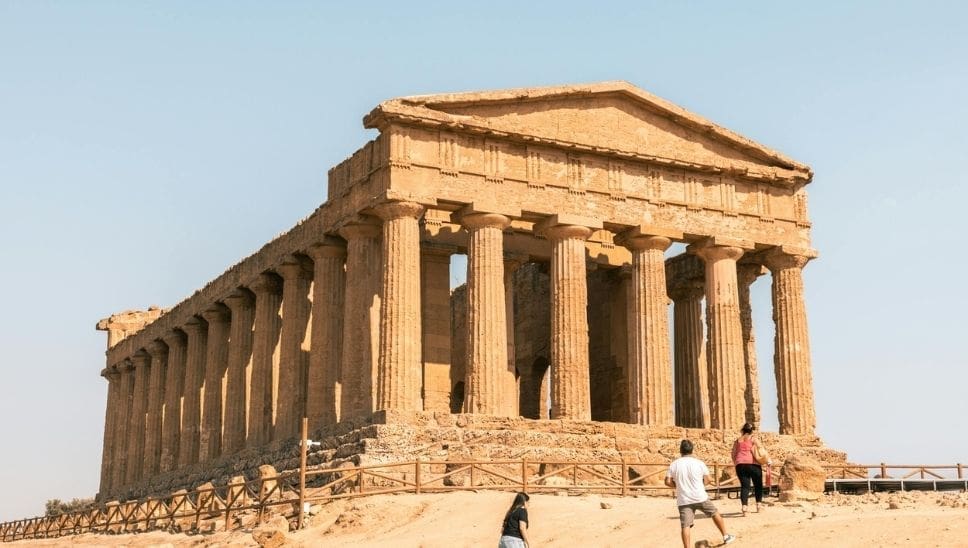
Perhaps the most iconic structure within the Valley of the Temples is the Temple of Concordia. Its remarkably intact state makes it one of the best-preserved Doric temples in the world. Built around 440-430 BC, its elegant proportions and harmonious design exemplify the classical Greek architectural ideals. The temple was later converted into a Christian basilica in the 6th century AD. This contributed significantly to its preservation over the centuries. Gazing at its sturdy columns against the Sicilian sky evokes a sense of timeless beauty. But also the enduring power of ancient craftsmanship. Nearby, the poignant statue of Fallen Icarus, a modern artwork. It depicts the mythical figure who fell after flying too close to the sun, created by the sculptor Igor Mitoraj. A contemporary layer to the historical context of the Valley of the Temples.
The Temple of Hera Lacinia
Perched on the eastern edge of the Valley of the Temples, the Temple of Hera Lacinia (also known as the Temple of Juno) offers stunning panoramic views of the entire archaeological site and the surrounding landscape. Constructed around 450 BC, it was dedicated to the Greek goddess Hera. Although partially ruined, the remaining columns still convey its original imposing presence. The temple’s strategic location highlights the ancient Greeks’ keen understanding of topography and their integration of sacred spaces within the natural environment.
The Temple of Heracles: An Ancient Landmark in the Valley of the Temples
The Temple of Heracles (or Hercules), the oldest temple in the Valley of the Temples, dates back to the late 6th century BC. Although now largely in ruins with only a few columns still standing, its sheer age and the remnants of its massive structure speak volumes about the early development of Doric architecture in Sicily. Legend attributes its construction to the mythical hero Heracles, further enriching its historical and cultural significance. Exploring its weathered stones offers a glimpse into the earliest phases of Greek settlement in this region.
The Temple of Olympian Zeus: Grandeur in Ruins in the Valley of the Temples
The Temple of Olympian Zeus, once one of the largest Doric temples ever built, now lies in impressive ruins within the Valley of the Temples. Construction began after the victory of Himera in 480 BC, where the armies of Syracuse and Agrigento defeated the Carthaginians, and was never fully completed. The massive scale of its remains, including colossal telamons (giant sculpted male figures used as columns), hints at the ambition and wealth of ancient Akragas. Though earthquake damage has taken its toll, the scattered stones and reclining telamon replicas still inspire awe and provide a sense of the monumental scale of this ancient undertaking.
The Enigmatic Temple of the Dioscuri
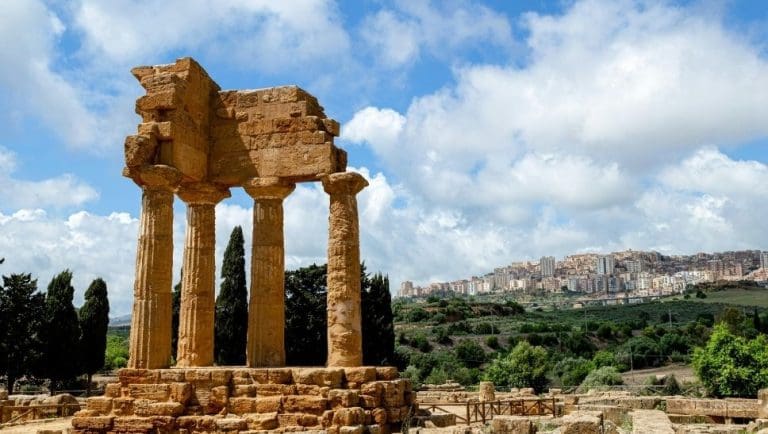
The Temple of the Dioscuri, also known as the Temple of Castor and Pollux, stands as a striking symbol within the Valley of the Temples, despite only four of its Doric columns remaining intact. Built in the 5th century BC, its dedication to the twin brothers of Greek mythology is significant, representing brotherhood and heroism. The temple’s current appearance is largely the result of 19th-century anastylosis (reconstruction), which pieced together surviving elements. Its iconic silhouette against the sky makes it a popular subject for photographs, embodying the ancient grandeur and the ongoing efforts to preserve the Valley of the Temples for future generations.
Beyond the Temples: Uncovering More of the Valley of the Temples
The Valley of the Temples encompasses more than just its famous temples. Visitors can also explore the remains of ancient city walls, necropolises, sanctuaries, and even an ancient gymnasium. The Kolymbetra Garden, located in the valley below the temples, offers a lush oasis of citrus groves and Mediterranean vegetation, providing a contrast to the ancient stone structures. This integration of archaeological wonders and natural beauty makes the Valley of the Temples a truly captivating and multifaceted destination for anyone interested in history, culture, and the enduring legacy of the ancient world.
The Sanctuary of the Chthonic Deities: Mystery in the Valley of the Temples
Within the Valley of the Temples, the Sanctuary of the Chthonic Deities offers a glimpse into the more mysterious religious practices of the ancient Greeks. This area, consisting of several altars and small temples, was likely dedicated to deities associated with the underworld, such as Demeter and Persephone. The atmosphere here is distinct, evoking a sense of ancient rituals and beliefs connected to the earth and the cycle of life and death. Exploring this sanctuary provides a deeper understanding of the diverse religious landscape of ancient Akragas.
Planning Your Visit to the Valley of the Temples: Practical Information
Reaching the Valley of the Temples is straightforward. Agrigento is well-connected by train and bus from major Sicilian cities like Palermo and Catania. Once in Agrigento, local buses or taxis can take you to the archaeological site. The Valley of the Temples generally opens around 8:30 AM, with closing times varying depending on the season (typically between 6:00 PM and 8:00 PM). It’s advisable to check the official website for the most up-to-date hours. Spring and autumn offer pleasant temperatures for exploring, avoiding the summer heat. From July to September, starting from 5:30 PM, the Valley of the Temples offers sunset visits to admire the temples illuminated by the twilight and then by the night lights. A unique opportunity to enjoy the charm of ancient architecture from a unique perspective.
Essential Equipment for Exploring the Valley of the Temples
To fully enjoy your visit to the Valley of the Temples, comfortable walking shoes are essential as the site is extensive and involves walking on uneven terrain. During the warmer months, a hat, sunscreen, and plenty of water are crucial to protect yourself from the sun. While guided tours are available, exploring at your own pace listening to an immersive audio guide allows for a more personal experience. A camera is a must to capture the breathtaking views and the impressive scale of these ancient wonders.
0 Comment